
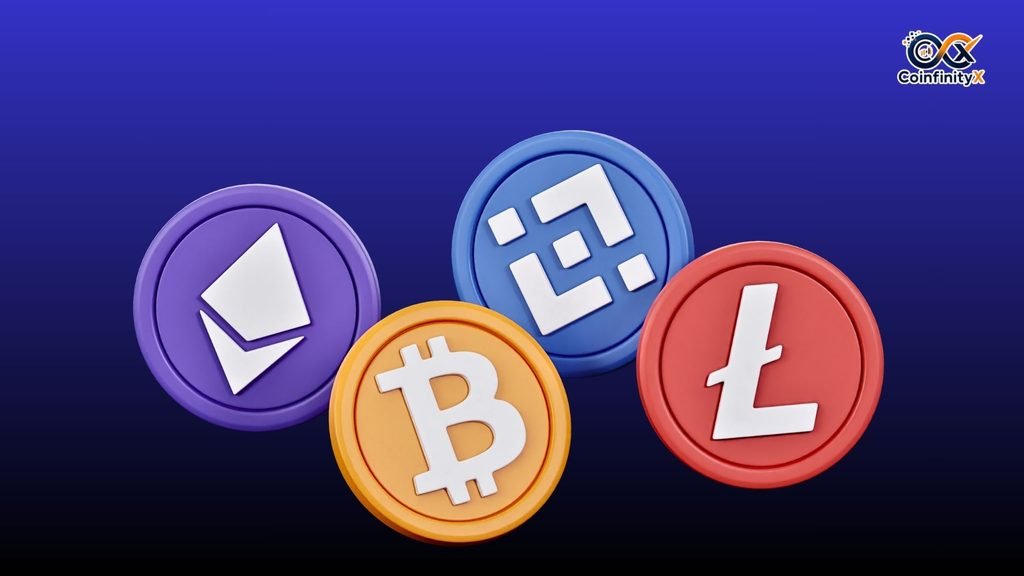
Bitcoin may have introduced the world to cryptocurrency, but it is no longer the only digital asset in the market. Thousands of cryptocurrencies now exist, each designed with different technologies, purposes, and economic models. This is where the term altcoin becomes important.
An altcoin is generally any cryptocurrency other than Bitcoin. The name combines the words “alternative” and “coin” and covers a remarkably diverse group of digital assets. Some altcoins implement smart contracts and dApps, others are payment-oriented, stable value, governance, and community-oriented projects.
What Is an Altcoin?
Altcoins are cryptocurrencies that are not Bitcoin (BTC). It was initially used to refer to cryptocurrencies that were developed as an alternative to Bitcoin and that tried to fix some of its technological flaws.
In 2009, Bitcoin was introduced as a decentralized, digital currency. As its technology became popular, new blockchain designs and use examples started to emerge. For instance, Litecoin was launched in 2011 and was designed to create blocks quicker than Bitcoin.
Others have gone much further with the idea. Ethereum, which was launched in 2015, was a blockchain that became programmable and was able to execute decentralized applications and smart contracts.
Today, the term altcoin refers to thousands of different assets, from the major blockchain networks to the most niche tokens and even meme coins.
Why were Altcoins Invented?
There are numerous reasons for the existence of Altcoins. Some developers sought to improve Bitcoin’s features, and others were looking to see other applications of blockchain technology apart from digital payments.
Common goals include:
- Faster transactions: Some networks have a faster transaction speed.
- Reduced transaction costs: Some blockchains are looking for lower transaction costs.
- Programmable applications: Ethereum is one platform that enables developers to write programmable applications using smart contracts.
- Stable-value payments: Stablecoins are intended to bring down the volatility of cryptocurrencies.
- Decentralized finance (DeFi): A few tokens offer lending, borrowing, trading, and other financial functions.
- Governance: Governance tokens can be used to allow owners to vote in blockchain projects.
- Experimentation: Developers test out different blockchain designs to put new economic and technical concepts to the test.
The use of the term altcoin doesn’t give you any indication of what it is exactly. It’s just a general term.
How Do Altcoins Work?
Many of the altcoins utilize blockchain, similar to Bitcoin. A blockchain is an electronic ledger that keeps records of transactions across a network of computers.
There are other technical designs, however, that can be used by altcoins. A key difference lies in the consensus mechanism, which dictates how transactions are validated and secured in the network.
Bitcoin is based on Proof of Work (PoW). The miners use computing power to compete to add new blocks to the blockchain.
Proof of Stake (PoS) is utilized by many newer blockchain networks. Participants commit cryptocurrency to support transaction validation and network security instead of mining hardware.
There are also some altcoins that are able to provide smart contracts. They’re applications that run on a blockchain and can be triggered by predetermined conditions. Smart contracts are the backbone of numerous decentralized applications, such as DeFi systems and blockchain games.
Coin vs. Token: What’s the Difference?
The terms “coin” and “token” are often used interchangeably, but there is an important distinction. A coin is a term used to describe a cryptocurrency with its own blockchain. Some examples are: Bitcoin, Ether (Ethereum), SOL (Solana), and ADA (Cardano).
On the other hand, tokens are usually developed on top of an existing blockchain. An example of this is that many tokens utilize the infrastructure and standards of the Ethereum network.
It’s important to note that this distinction is not necessarily tied to an asset being on its own blockchain, but it does mean that it can’t be considered part of the altcoin market. In general conversation about cryptocurrencies, the term altcoin is employed broadly for digital assets other than Bitcoin.
Main Types of Altcoins
There are a number of major categories of altcoins.
1. Smart-Contract Platforms
They are blockchain networks that are meant to be used for applications and smart contracts.
The most popular example is Ethereum (ETH). Solana, Cardano and Avalanche are other networks that also offer infrastructure for decentralised applications.
2. Stablecoins
Stablecoins are cryptocurrencies that are intended to have a relatively steady value, sometimes through being tied to an asset like the US dollar.
Examples include prominent ones like Tether (USDT) and USD Coin (USDC). Stablecoins are popular among traders, for payments, transfers, and decentralized finance.
The prices of their currencies are supposed to be fixed, but there are risks associated with reserves, issuers, loan backing, and their intended peg.
3. Utility Tokens
Utility tokens are used to access particular services or functions in a cryptocurrency ecosystem.
They can be employed for transaction charges, application access, discounts, or specific blockchain services.
4. Governance Tokens
The holders of governance tokens can vote on decisions that will affect a decentralized protocol or organization.
Votes could include protocol parameter changes, changes to the treasury fund, or future development of the project.
5. Meme Coins
Meme coins may be based on internet culture, puns, celebrities, or online communities. Some popular ones include Dogecoin and Shiba Inu.
They are often very volatile and are subject to strong fluctuations in price, depending on the attention of social media and the mood of the market.
Bitcoin vs. Altcoins
Bitcoin and altcoins share blockchain technology, but their goals can be very different.
| Feature | Bitcoin | Many Altcoins |
| Primary purpose | Digital money and store of value | Payments, applications, DeFi, governance and more |
| Supply | Maximum of 21 million BTC | Varies by project |
| Consensus | Proof of Work | PoS and other mechanisms |
| Technology | Conservative and security-focused | Often designed for additional functionality |
| Risk | High | Often higher, especially for smaller projects |
| Use cases | Payments, settlement, savings | Apps, payments, gaming, finance and other uses |
Bitcoin has a different risk profile compared to many smaller cryptocurrencies due to its long history and large network. New tokens may have new features, but also limited liquidity and high volatility, and there is increased volatility and project risk.
What are the risks of Altcoins?
While there are considerable opportunities with altcoins, there is typically much greater risk than with Bitcoin.
The one big issue here is volatility. Smaller cryptocurrencies might have a higher likelihood of experiencing dramatic price movements, as they typically have lower market capitalization and liquidity.
Project Risk also exists. Some cryptocurrencies have lost their developers, their users, funding, or their relevance and are inactive. There have been thousands of abandoned cryptocurrencies over the years.
Other risks include smart contract exploits, exchange failures, token concentration, regulatory changes, market manipulation, phishing attacks, and fraudulent projects.
What is Altcoin Season?
Altcoin season is a time when a lot of altcoins beat out Bitcoin for extended periods of time.
In these times, investors might be more inclined to accept more risk, which will lead to capital being allocated to smaller cryptocurrencies. Traders watch to see how Bitcoin fares on the total cryptocurrency market when determining market cycles, and one indicator they use to determine this is the percentage of the total crypto market capitalization that Bitcoin holds, known as its dominance.
But, altcoin cycles can also cause excessive speculation. Rising prices may be followed by falling prices and vice versa, especially in the event of a shift in market sentiment.
Conclusion
Altcoin is an umbrella term used to describe any cryptocurrency or coin that is not Bitcoin, but there are thousands of digital currencies that fall under this umbrella term.
There are some which have stable value currencies, some that power smart contract platforms, some that enable decentralized finance, governance, payments or even online communities. This diversity is one of the contributing factors for the growth of the cryptocurrency ecosystem.
Meanwhile, altcoins may be much more volatile and risky than Bitcoin. Some projects are successful and build up huge ecosystems, and some projects fall to the wayside completely.
| Feature | Bitcoin | Many Altcoins |
| Primary purpose | Digital money and store of value | Payments, applications, DeFi, governance and more |
| Supply | Maximum of 21 million BTC | Varies by project |
| Consensus | Proof of Work | PoS and other mechanisms |
| Technology | Conservative and security-focused | Often designed for additional functionality |
| Risk | High | Often higher, especially for smaller projects |
| Use cases | Payments, settlement, savings | Apps, payments, gaming, finance and other uses |