
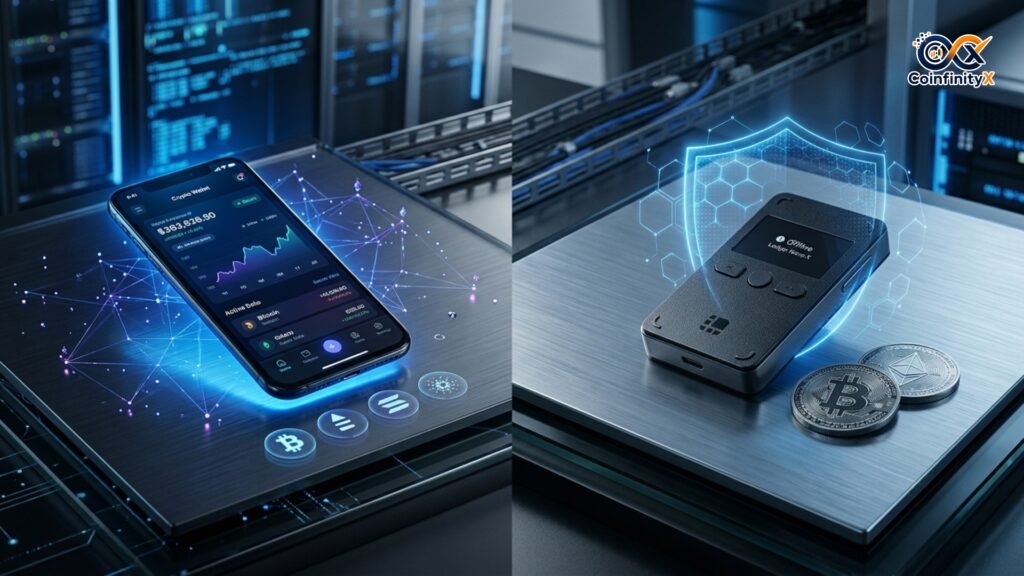
Purchasing cryptocurrency is not the only aspect of digital asset ownership. The way you store and protect those assets is just as important. The blockchain is a record of the crypto held on it, which is different from physical wallets where cash is stored. A crypto wallet provides you with the keys necessary to access and manage these assets. Hot vs Cold Wallet.
Hot wallets are the two main types of crypto wallets. The key feature that differentiates the two is the internet connection. Hot wallets are internet-connected wallets that are convenient for frequent transactions. Cold wallets are stored offline which may help minimize online attack exposure.
Both options function in a particular manner and having an understanding of how both of these options work can help you select a storage method that best suits the way that you use crypto.
What Is a Crypto Wallet?
A crypto wallet isn’t a physical wallet that holds Bitcoin, Ethereum or other cryptocurrencies. Those are located on each of the blockchains, respectively.
Instead, a wallet holds the crypto keys, which are used to access and control the assets. They have public and private keys.
A public key is similar to an address. You can exchange it with another person who desires to dispatch you cryptocurrency. That’s not the case with a private key. It is used for authorizing transactions and providing control over assets in the wallet.
This is why it is crucial to have a private key. Anyone who accesses them could be able to control the connected crypto.
Self-custodial wallets allow users to manage their private keys. Custodial wallets, however, are an example of a third-party wallet that takes care of users’ keys for them.
What is a Hot Wallet?
A hot wallet is a software-based crypto wallet which is connected to the internet. It can be run from a mobile device, tablet, laptop, desktop or via a browser.
The greatest benefit it has is its ease of use.
This allows users to seamlessly send, receive, and handle cryptocurrencies without the need to install an external physical device. This is why hot wallets are popular among frequent traders and those who use blockchain applications.
These include exchange platforms like MetaMask, Trust Wallet, and Exodus. Compared to different kinds of hot wallets, each one supports a different blockchain and assets, so it’s important for users to check their compatibility before selecting one.
Hot wallets also have the ability to interface with decentralized applications (dApps). This has a variety of applications, including decentralized finance, token swaps, NFT marketplaces, and other Web3 applications.
But, their internet connection also poses extra dangers. The wallet’s credentials may be exposed through phishing attacks, malware, malicious websites, and compromised devices.
What Is a Cold Wallet?
The idea behind a cold wallet is to store private keys offline. Cold storage can also be a way to reduce the threat of a remote attack by keeping the keys offline.
The most frequent type of cold storage is hardware wallets. They are physical objects, such as a USB stick, smart card, or other small object.
There are two hardware wallet manufacturers that are popular, namely Ledger and Trezor.
Typically, on a hardware wallet, the transactions are made by the user, and the user has to handle the physical wallet and confirm/sign the transaction. After the transaction, the device can be unplugged.
For some individuals who may wish to keep cryptocurrencies for extended durations of time and don’t require instant access to their funds, cold storage may be very useful.
But cold wallets are not entirely secure, however. A device may be lost, damaged, or stolen. Most significantly, if there isn’t a trustworthy recovery phrase backup, then it can create significant problems.
Hot Wallet vs. Cold Wallet
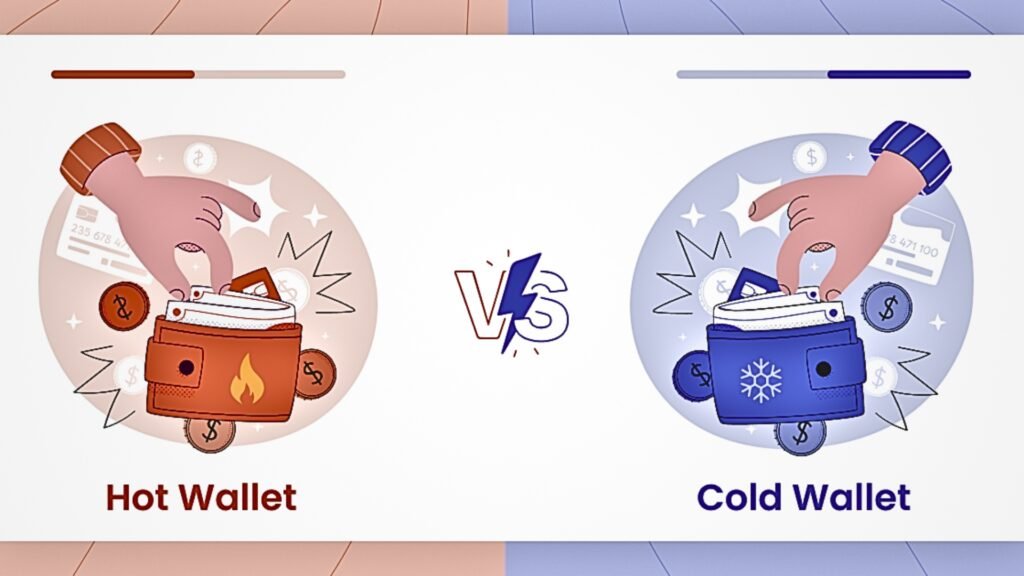
The simplest explanation of the distinction is to consider ease of use against offline security.
Hot wallets are created for accessibility. They are typically free to download and provide users with easy access to their crypto.
Cold wallets will need extra precautions. They may also require purchasing a physical device. The absence of private keys in the internet can create another layer of security protection from online threats.
A hot wallet might be a viable option for periodic trades. If cold storage is desired the longer haul may be better suited to cold storage.
Both are no panacea for risk. Security of a wallet is also related to its setup and use.
Types of Cold Wallets
There are several types of cold storage.
The most commonly known is a hardware wallet. They store private keys on a physical device and typically require user confirmation on the device to complete transactions.
Offline Storage is taken to the next level with Air-gapped wallets. Some can even sign transactions without ever being connected to the internet. Transferring transaction information can be done via QR codes, etc.
Paper wallets is another form of cold storage. They include writing down the public key and private key in a place where they can be seen. But when physical damage, loss or deterioration occurs, this can be hard to manage safely.
Deep cold storage is also available. This includes the deliberate complexity of accessing the wallet devices or backup information, which are placed in extremely secure physical locations.
The aim is straightforward: minimise needless exposure, whilst maintaining access to assets.
Types of Hot Wallets
Hot wallets also come in different forms.
Mobile wallets are built for mobile devices and offer easy access for those out and about. Browser wallets can be extensions on computers, and desktop wallets can be installed on computers.
There are wallets that are specifically developed for a specific blockchain ecosystem. For instance, MetaMask is known with the apps on Ethereum while Phantom is connected to the Solana ecosystem.
When picking a hot wallet, users ought to take into account more than just the looks. It can be reputation, cryptocurrencies supported, security characteristics, user experience or compatibility with various applications.
Wallets should also be downloaded from trusted sources and ensure that the software is authentic.
Are Cold Wallets More Secure?
Private keys are not stored on an online server, providing higher protection against online attacks in cold wallets.
This doesn’t imply that they are entirely safe.
A cold wallet can still be lost, or become damaged. A recovery phrase may also be lost, stolen or compromised.
There are some hardware wallets with wireless capabilities or software connections. The user should know how his specific device operates, not assuming that all devices on the market are entirely off the Internet.
Security is more than just cold storage. It also relies on proper management of the device, private keys and the recovery information.
Can you use Hot and Cold Wallet together?
Yes. Numerous crypto users can use both.
There is a smaller amount of money in a hot wallet that will be used for regular business. It can be used to trade, pay or communicate with Web3 apps.
The assets stored in a cold wallet can be those that are meant for long-term storage.
This results in a two-step process. The hot wallet is accessible and the cold wallet minimizes the amount of crypto that is in an internet-connected environment.
Having separate wallets can also be beneficial when dealing with new decentralized applications. A separate wallet can be used to contain specific activities of the wallet that contains long-term investments.
Which Wallet Should You Choose?
No one wallet suits all crypto users.
A hot wallet can be a convenient option when you are a frequent trader or user of decentralized applications.
Cold storage might be better if you intend to keep your cryptos for an extended period and don’t need to leave them vulnerable to online threats.
The quantity of crypto you have can additionally have an effect on your choice. Some users like to only operate a small amount in a hot wallet and store larger amounts in a different wallet.
The key is to know the trade-off. Hot wallets are for convenience and accessibility. Cool Wallets favor offline storage and less online exposure.