

- Bitcoin-backed lending is making a strong comeback with safer and more transparent platforms.
- The market could grow from $3 billion today to $1 trillion over the next decade.
- CeFi and DeFi let Bitcoin holders borrow without selling their BTC.
Bitcoin Lending Renaissance is more than a passing trend, it’s a structural transformation that is reshaping how the world borrows and lends using digital collateral. The market endured a harsh winter in 2022 following the catastrophic collapses of Celsius, BlockFi, and Voyager. However, 2026 looks dramatically different. As Bitcoin continues its ascent toward $76,600 and a market capitalization above $1.5 trillion, a new generation of lenders, protocols, and institutional custodians is emerging on stronger foundations. Newly released research from digital-asset lender Ledn predicts that bitcoin-backed loans could grow into a $1 trillion consumer market over the next decade as borrower demand accelerates and the supporting infrastructure continues to mature.
This article discusses how, why, and what’s next in the Bitcoin Lending revolution, and the reasons why both retail HODLers and institutional treasuries are taking notice.
The bitcoin lending renaissance seems to be gaining traction. The recent Bitcoin lending renaissance is on the move.
The demand gap between $3 Billion and $1 Trillion.
The market for consumer loans backed by bitcoins is estimated to be about $3 billion, which is a small percentage of the Bitcoin market cap of several trillion dollars. However, according to a survey by U.S.-based crypto analytics firm, Ledn, 88% of those surveyed would use a crypto-backed loan or credit product if it existed, with just 14% already doing so. The 6x gap between the number of people interested in lending and the number of people actually doing it is what’s driving the bitcoin lending revival.
The overwhelming majority of the borrowers are long-term BTC holders, who seek liquidity without triggering any taxable event. Bitcoins-backed loan is a line of credit, secured by bitcoin, or maybe a home equity loan, with the difference that the security is decentralized, borderless, and programmatic.
The Infrastructure Layer is Now Ready.
The most important thing about 2026 isn’t the number of headlines loans, it’s the infrastructure building under the headlines loans. There are currently five commercially available components needed for institutional grade bitcoin lending:
Unregulated custody ( Binance, Kraken, Coinbase, BitMart, BTCC, Kucoin)
Bankruptcy-remote collateral structures
Real time price feeds (Chainlink oracle networks)
Automated liquidation engines
Standardized legal documentation (ISDA-adjacent master agreements from Debevoise & Plimpton and Sullivan & Cromwell)
The five key components are now in place and the trust breach from 2022 is now being mended.
A Bifurcated Market: CeFi vs. DeFi.
It’s easy to divide the bitcoin lending renaissance into two streams.
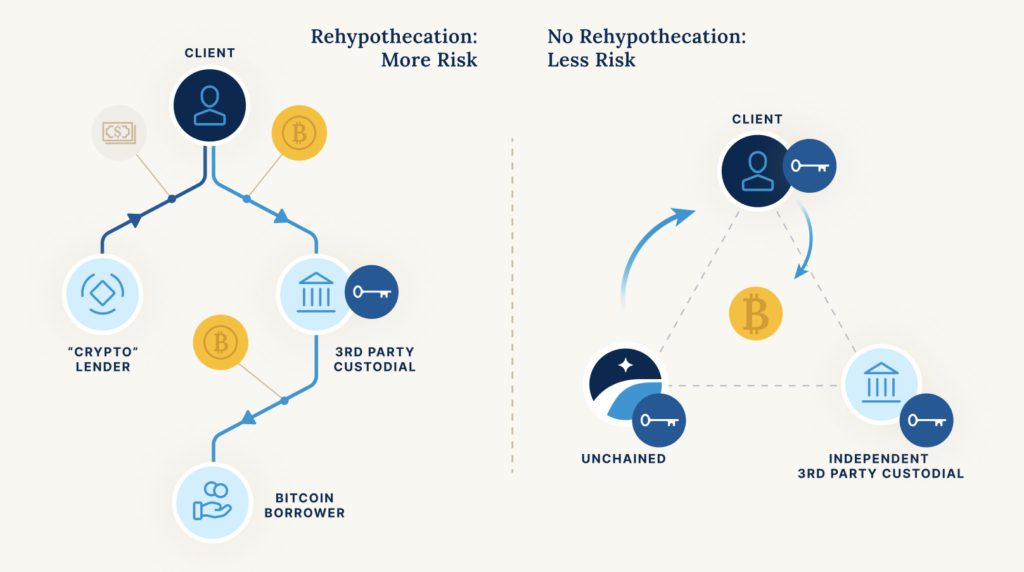
At the heart of both Celsius and BlockFi’s failures in 2022 was a lack of transparency and rehypothecation, in which the lenders re-lent customer collateral without their knowledge. This risk is not replicated in DeFi smart contracts, and on-chain protocols are emerging with a transparency advantage that is fast paving the way for bitcoin lending to take off.
Bitcoin-backed loans is the ultimate guide – Unchained
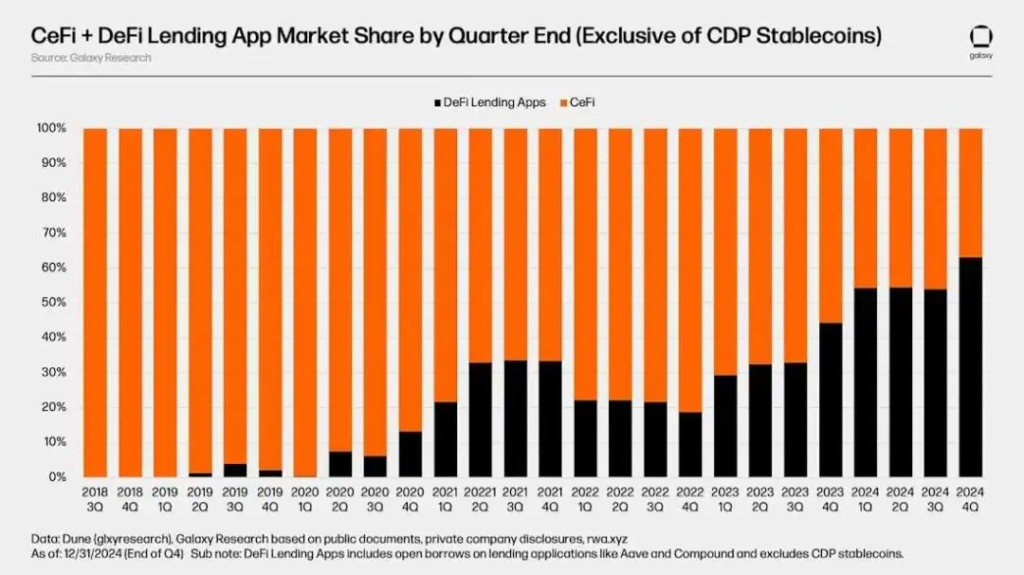
Galaxy Crypto Lending Market Report: Market size is $36.5 billion USD and the DeFi sector has expanded remarkably.
The Dawn of a New Era for Bitcoin and Cryptocurrencies
Bitcoin-backed loans are not given in bitcoins. They are denominated in dollars or dollar-equivalent stablecoins, which is an input of the first order in market growth.
In May 2026, the supply of USDC on Circle was $77 billion, serving as the main liquidity pool where the bitcoins used for loans are redeemed. With USDC, lenders can fund Ethereum or Solana in a matter of minutes, whereas wire transfers take T+1 or T+2 days. That’s a real benefit for borrowers who require working capital in a hurry, rather than a credit line from a bank.
Another structural licensing issue of the stablecoin-as-loan-currency model is that the USD deposits must be backed by loans, which means the stablecoin holder needs a banking license. May not (depending on jurisdiction) be held in a smart contract and disbursed against overcollateralized BTC. The gray area is getting smaller as the U.S. Senate works on stablecoin legislation this year, which may pave the way for federally-regulated banks to become involved.
How is the market expected to progress? What is the forecast for market growth?
The figures reflect the massive bitcoin lending revival:
Global Bitcoin Loan Market (2025): ~$1.5 billion
Projected Valuation (2034): ~$7.5 billion at a 17.5% CAGR
The broader crypto lending market has grown to $73.6 billion, per Galaxy Research.
Crypto Lending Platform Market (2026): $12.69 billion, projected to reach $25.06 billion by 2030 at an 18.5% CAGR
North America accounted for the largest market valued at $4.2 billion in 2024, which is projected to reach $12.5 billion by 2033. Asia-Pacific is the fastest growing region with a growth rate of 17.3%, followed by Singapore, Japan and South Korea.
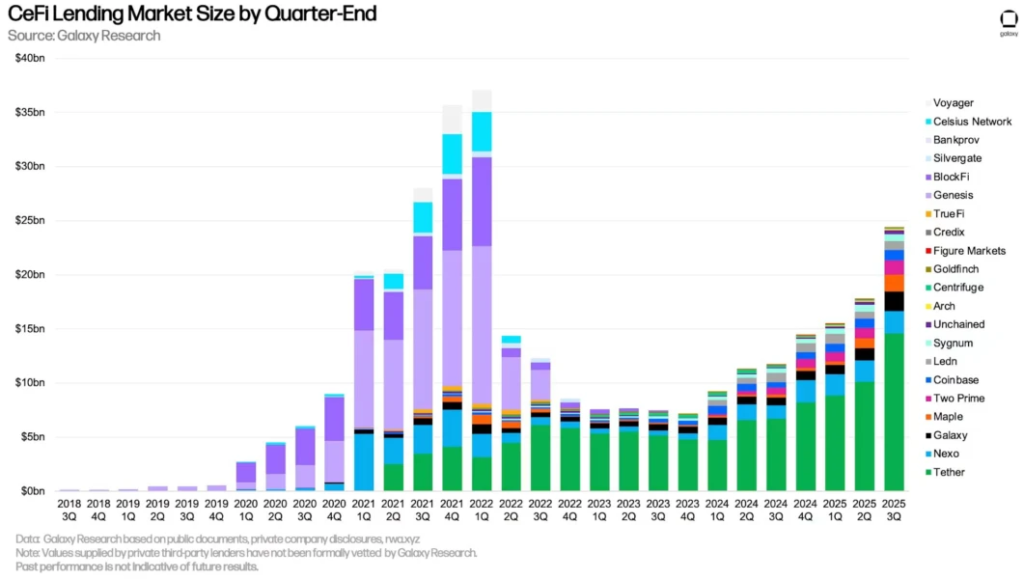
The crypto lending market has been led by ‘transparent’ players, with $25B worth of the market controlled by them, says Galaxy — TradingView News
During periods of market volatility, it is essential to learn how to safeguard your Bitcoin-backed loan.During market volatility, it is important to learn how to protect your Bitcoin-backed loan.
The Changing Landscape of the Institutional Players. Institutional Player’s reshaping the landscape.
The bitcoin lending renaissance isn’t restricted to retail customers. In April 2025, Forbes claimed that the top three crypto lending companies, Tether, Galaxy Digital, and Ledn, control a large portion of the $37 billion crypto lending centralized financial (CeFi) industry market. Their development answers the need to be transparent and balance sheets audited, as an institutional grade.
Meanwhile, AMINA Bank reported in April 2026 that the Bitcoin-backed borrowing is becoming a force to reckon with in the global credit markets, as regulated banks in Switzerland, Singapore and the UAE are now offering BTC-backed credit lines to high-net-worth customers. The institutional normalisation is something that is common to the bitcoin lending renaissance.
Risk Management and Borrower Protections
After the experiences of 2022, modern bitcoin lending platforms have gotten a good education. There are now the following key safeguards:
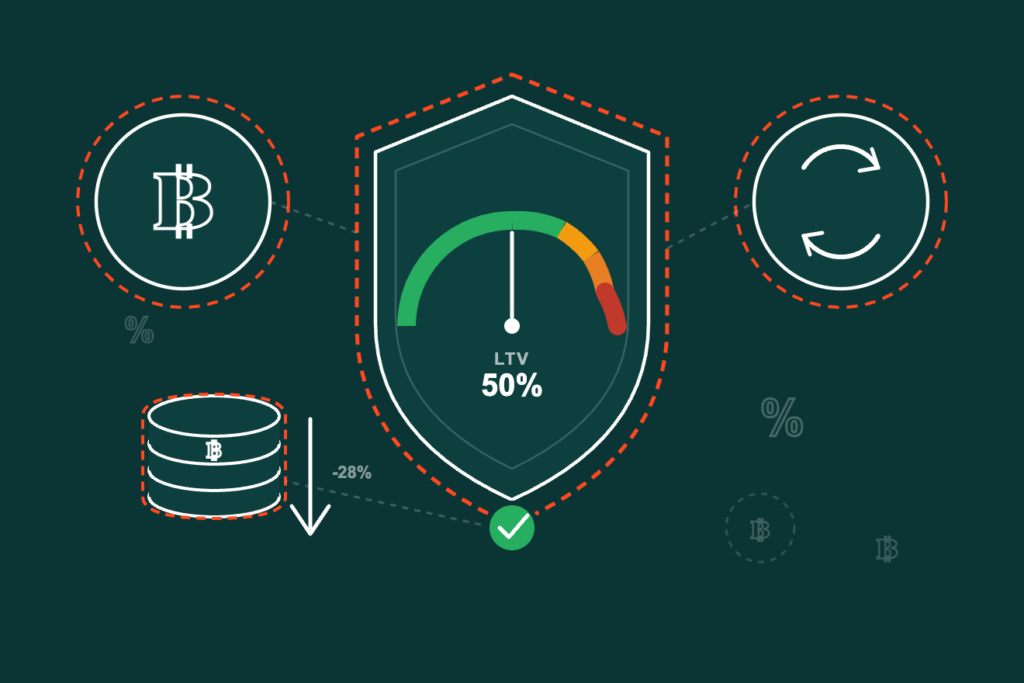
Lower loan-to-value (LTV) ratios (typically 30%–50% vs. 70%+ pre-2022)
Monitoring and automatic liquidation of margins in real-time.Real-time margin monitoring, automatic margin liquidation.
Bankruptcy remote custody through third-party qualified custodians; segregation.
No contractual and on-chain proof rehypothecation pledges.
These mechanisms help lower the risk of cascading liquidations when the market dips and put a lid on borrower confidence.
Conclusion
It is not just a return to the 2022 crypto lending revival, but a new and more robust, transparent and institutional lending market. The market has $3 billion in existing consumer financing products, and is on track to reach a $1 trillion market in 10 years, filling the gap between decentralized digital assets and traditional finance.
The regulated custody, bankruptcy-remote structures, on-chain transparency and stablecoin rails that allow for instant settlement are what set this period apart from the speculative lending boom of 2020–2022. Today, borrowers have options that were not available three years ago, either via CeFi platforms such as Ledn and Unchained, or DeFi protocols such as Aave and Compound.
The next big question is: When will regulatory clarity, especially with respect to stablecoins and digital asset custody, open the floodgates to the next round of institutional capital? The bitcoin lending renaissance provides a compelling solution for long-term BTC investors looking to get short-term liquidity without giving up on their investments.